Robot Trucks Are Officially Testing on California Highways
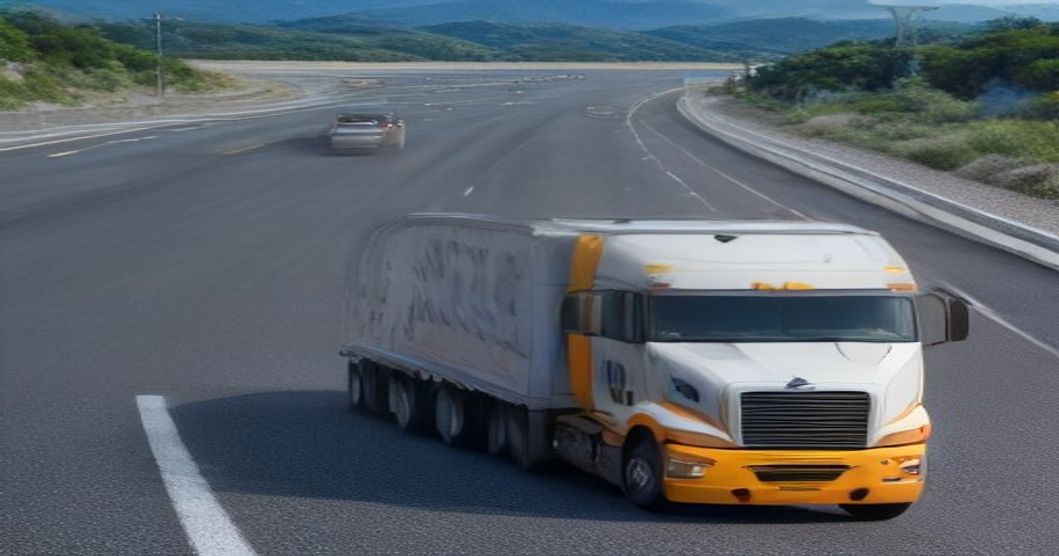
If you've driven through the Central Valley or along Interstate 580 recently and spotted a Peterbilt with a weird sensor array on its roof, no – you're not seeing things. That's not a science fiction movie prop, and it's not some university research prototype that's going to be towed away in an hour. Those are licensed, road-legal autonomous trucks, and they're officially allowed to test on California highways starting now.
Aurora Innovation and Kodiak AI both just received testing permits from the California DMV to operate self-driving trucks on the state's highways. Let's unpack what that actually means, why it matters to you even if you've never driven a truck in your life, and what the next few years of freight hauling are going to look like.
The Big News: Permits Are In Hand
California has always been cautious with autonomous vehicle regulations. For years, self-driving passenger cars from Waymo and Cruise were the only ones rolling through San Francisco streets. Trucks were a different beast entirely – heavy, long braking distances, limited visibility, and a lot more at stake when something goes wrong.
That's why this permit approval is a bigger deal than the usual tech announcement. Aurora and Kodiak aren't just running closed-track tests anymore. They can legally operate on California's highway system with safety drivers aboard, and in some cases, the permits allow for testing under specific conditions. Both companies have been running successful operations in Texas – where the regulatory environment is more lenient – but California is the crown jewel. Getting approved here means your trucking route is finally considered viable.
Aurora's website (https://aurora.tech) describes its system as the "Aurora Driver," a hardware-and-software stack designed specifically for Class 8 trucks. Kodiak's approach, detailed at https://kodiak.ai, focuses on a sensor suite that prioritizes long-range detection – essential when you're hauling 80,000 pounds at 65 miles per hour.
What's Actually On Those Trucks?
Let's talk hardware for a second. These aren't your typical cars with a lidar puck on the roof. An autonomous truck looks more like a mobile observatory. You've got:
- **Main lidar units** mounted on the cab roof that spin and scan 360 degrees around the truck
- **Radar sensors** hidden behind the grille and bumpers that can see through rain, fog, and dust
- **High-resolution cameras** positioned on the mirrors, roof, and hood
- **GPS receivers** with redundant positioning systems
- **Onboard computers** that process all this data in real time
The key difference between these trucks and the autonomous cars you might have ridden in? Predictability. Trucks drive on highways, not chaotic city streets. Highways have fewer pedestrians, no cyclists, no random double-parked cars. The lanes are clear, the speeds are consistent, and the routes are far easier to map and verify.
That's why both Aurora and Kodiak started with highways. It's the simplest version of the self-driving problem, which means it's the most likely to actually work in the real world.
Scenario 1: You're Driving Through the Bay Area Commute
Picture this: It's 7 AM on a Tuesday, you're on I-580 westbound heading into Oakland, and you're stuck behind a slow-moving Freightliner. You glance over to change lanes, and you notice the driver's seat is empty. No – worse. There's a person in the driver's seat, but their hands are in their lap and they're staring at a tablet, not the road.
That's not a reckless driver. That's a safety operator monitoring the Kodiak system. You might feel a flash of panic at first, but what you'll notice after a few minutes is that the truck is actually driving *better* than most human drivers. It maintains a consistent following distance, it doesn't drift in its lane, and it doesn't suddenly brake for no reason.
Is It Safe? Let's Talk Honestly
This is the question everyone asks, and it deserves a straight answer: autonomous trucks are safer than human-driven trucks in many ways, but they're not perfect yet.
Here's the evidence on the side of the robots:
- Autonomous systems never get tired, never text, never drive under the influence, and never have a "bad day."
- Reaction times are measured in milliseconds, not human seconds.
- Lidar and radar can "see" in fog and darkness far better than human eyes.
- The systems are constantly comparing sensor data against high-definition maps, catching hazards earlier.
But there are legitimate concerns too. Sensors can get dirty. Heavy rain can confuse lidar. And the edge cases – the weird, unexpected situations that happen on real roads – are exactly where these systems are still being tested.
The California DMV didn't just hand out these permits without strings attached. Companies have to report any incidents, they need safety drivers with commercial licenses in the cab at all times, and the permits can be pulled instantly if something goes wrong. It's a cautious green light, not a wild west situation.
What About Truck Drivers?
Every truck driver I've ever talked to has the same fear: "Will a robot take my job?" And honestly? The question is too simple. The more accurate question is, "When will the job change, and how do I adapt?"
Aurora and Kodiak both emphasize that their trucks will initially operate with a driver in the cab – not just for safety, but because the current technology still benefits from human judgment in complex situations. The bigger shift will be what the industry calls "middle-mile" or "hub-to-hub" routes. Think of it this way: a truck hauls goods from a distribution center in Los Angeles to a hub in Sacramento. That's the highway part. Then a human driver takes over for the final delivery to local stores. The robot handles the boring interstate driving; the human handles the tricky city streets and loading docks.
This is actually a potential win for drivers. Instead of spending weeks on the road away from family, many drivers could transition to regional routes that get them home every night. The trucks still need monitoring, loading, unloading, and supervision.
How This Will Change Your Day-to-Day Life
You might think you don't have a stake in this, but you absolutely do. Nearly everything you buy spent time on a truck. That includes the groceries in your fridge, the fuel in your car, the clothes on your back, and the packages on your doorstep.
Scenario 2: You Run a Small Business
Let's say you run a boutique online store and you ship 50 packages a day. Right now, your shipping costs include the driver's wage, fuel, insurance, and the cost of the truck itself. As autonomous trucks scale up, the biggest saving will be in labor. But that doesn't mean shipping gets cheaper overnight.
Infrastructure costs are massive – these trucks cost hundreds of thousands of dollars more than regular trucks. However, they can also drive nearly 24/7 with only brief stops for fuel and inspections. That means faster delivery times even without lower prices. Your customers could see their packages arrive a day sooner because the supply chain doesn't sleep anymore.
Scenario 3: You're a Truck Driver in Your 40s
This is the scenario that keeps people up at night, and it deserves empathy, not dismissal. If you've been driving for 20 years, robot trucks can feel like a death sentence. But here's the nuanced reality: your experience is still valuable. Companies need dispatchers who understand routes, safety monitors who can interpret what the truck is doing, and maintenance techs who can repair complex sensor systems. The industry is going to need thousands of people in new roles.
The practical advice? Start learning about the technology. Understanding how lidar works or how to interpret a data log could make you the ideal candidate for a monitoring position that pays comparable wages. The trucking industry is going to need people who can bridge the gap between "old school" logistics and new tech.
Sharing the Road: Practical Tips for Everyday Drivers
Okay, let's get practical. If you live in California, chances are you're going to encounter one of these trucks sooner rather than later. Here's how to interact with them safely:
**Don't do anything weird.** The autonomous system is programmed to predict standard driving behavior. If you brake suddenly, cut someone off, or drive erratically, the truck will respond defensively – which might mean hard braking. That's dangerous in a vehicle with an 80,000-pound payload.
**Give them space.** The general rules of following distance apply even more here. These trucks need more room to brake. Tailgating an autonomous truck is the worst idea you can possibly have. The system won't get angry, but it *will* brake at its maximum capacity if it detects a hazard, and you won't be able to stop as fast as you think.
**Respect the blind spots.** Autonomous trucks have sensors that can see much more than a human driver, but they still have physical blind spots around the trailer. Don't linger in the "no zone" next to the trailer body. Pass quickly and predictably.
**Don't stare.** It's natural to want to look at the empty driver's seat or the spinning lidar. But when you're driving 70 miles per hour, taking your eyes off the road for even one second is disastrous. The trucks will become more common, and eventually, they'll be as boring as traffic lights.
The Road Ahead
There's a lot of skepticism about autonomous vehicles, and honestly, some of it is justified. The technology has hit setbacks that seemed easy on paper and were brutal in practice. But the fact that Aurora and Kodiak got permits in California – a state that is famously strict about AV testing – suggests we're past the experimental phase and entering the deployment phase.
California will be the proving ground for the rest of the world. If these trucks can handle the variety of weather conditions – from the fog of the Central Valley to the heat of the Mojave – they can handle almost anything. And if the economics work out, the entire state's supply chain transforms. That's a big if, but for the first time, it's a credible one.
The next time you're on a California highway and you see a 40-ton robot rolling past, try to see it for what it really is: the biggest shift in freight transportation since the invention of the interstate highway system.
FAQ
**Q: Are self-driving trucks already delivering goods in California?**
A: Yes, but in a limited capacity. Aurora and Kodiak have received permits from the California DMV to test their autonomous trucks on state highways. These trucks are operating with safety drivers in the cab, and they're increasing their mileage as they gather more data. It's real, but you're not going to see fully driverless trucks cruising everywhere tomorrow.
**Q: What happens if an autonomous truck causes a crash?**
A: The company operating the truck is liable, not an individual driver – since there technically isn't one. The California DMV requires companies to report all incidents, including collisions and even near-misses that trigger a safety response. The data from sensors and onboard computers can be used to reconstruct exactly what happened, which often makes fault determination clearer than with human drivers.
**Q: Will self-driving trucks replace human truck drivers?**
A: Not entirely, and not quickly. The current model, even among the most advanced companies, puts a human driver in the cab for complex situations and local roads. The most likely outcome is a hybrid model where autonomous trucks handle long highway routes between hubs, and human drivers handle city deliveries and oversight. Employment will shift, but it won't vanish.
**Q: Is autonomous trucking safer than human trucking?**
A: Early data suggests it can be, at least for highway driving. The technology doesn't get tired or distracted, and it maintains safer following distances. However, the data is still limited, and the systems are still being tested for edge cases. That's exactly why California requires safety drivers and strict reporting. The potential is there, but it needs to prove itself over millions of miles before we can call it definitively safer.
Automobil
Comments (0)
No comments yet. Be the first to comment!
Leave a Comment