30 Years Later, Justice Lands: What Tupac's Murder Verdict Really Means
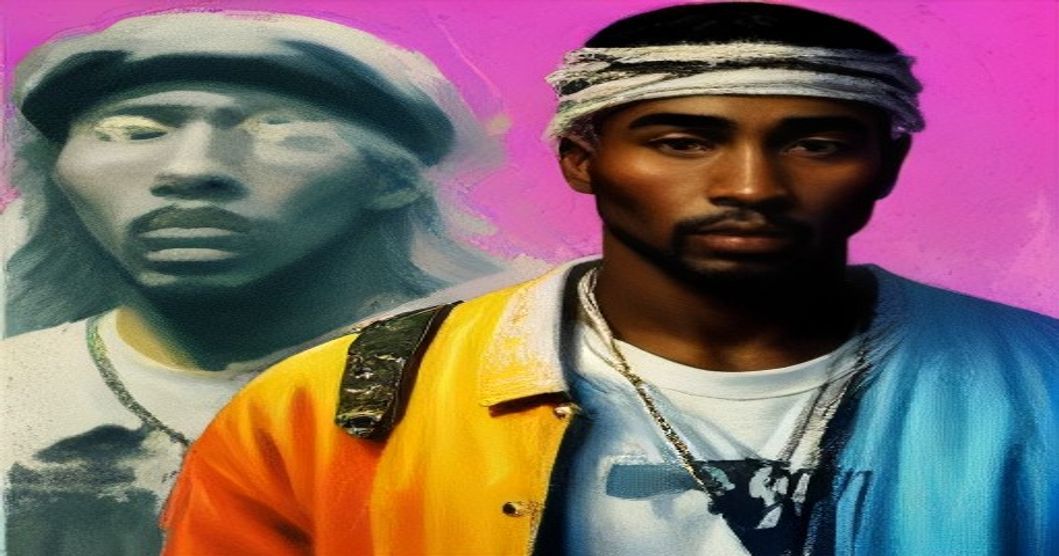
We finally got the verdict. And honestly, I’m still processing it. Duane "Keffe D" Davis, the former South Side Compton Crips gang leader, has been found guilty of orchestrating the 1996 drive-by shooting that killed Tupac Shakur. Thirty years. Three decades of documentaries, theories, diss tracks, and cold-case podcasts—and a Las Vegas jury finally said what so many of us suspected: the man who set it all in motion is now facing life behind bars.
I wasn't even born when Tupac died. But like millions of people who discovered his music on a burned CD or a late-night Spotify deep dive, his murder has always felt like a wound that never closed. This verdict doesn't bring Pac back. It doesn't un-write the ending of a story that should have had a third act. But it does something rare in our chaotic, algorithm-driven world: it closes a chapter with actual, verifiable justice.
Let me break down what happened, why this matters beyond the music, and what we can all learn from a case that took three decades to crack.
The Verdict That Took 30 Years
For those who haven't been following the legal saga, here’s the short version. On September 7, 1996, Tupac was shot multiple times in a BMW driven by Death Row Records founder Suge Knight. They were stopped at a red light near the Las Vegas Strip. A white Cadillac pulled up alongside them, and someone opened fire. Tupac died six days later. He was 25.
Davis wasn't the triggerman—he was in the front passenger seat of that Cadillac, and he's admitted as much in his own memoir and in numerous interviews. He claims the gun was fired from the back seat by his nephew, Orlando Anderson, who died in 1998. Anderson had been involved in a brawl with Tupac's entourage earlier that night at the MGM Grand—caught on casino security footage, no less.
Prosecutors finally charged Davis in 2023, and this week, the jury agreed: he was the "shot caller," the man who orchestrated the retaliation. The verdict is a masterclass in how long-form justice works—and how sometimes, even when you think a case is cold, the evidence was sitting in plain sight.
Why This Took So Long (And What It Teaches Us About Old Systems)
Here's where I pivot from true-crime fandom to something more practical. Why did this case take nearly three decades to bring to trial? It wasn't a lack of evidence. Davis literally wrote a book about it. He gave interviews to investigators. The Las Vegas Metropolitan Police Department knew who was in that car within days.
The problem was corroboration. In the '90s, you had eyewitness testimony, a few grainy video stills, and street code that made witnesses go silent. There was no social media trail, no geolocation data, no CCTV on every corner, and no way to track the digital footprint of a cell phone (because flip phones were just becoming a thing, and even those were dumb).
Sound familiar? It should. This is the exact same problem we face in the tech world when dealing with legacy systems. We have data, but it's fragmented, unverified, or locked in proprietary formats. The case cracked open only when Davis started talking publicly—on camera—and gave prosecutors the narrative they needed to corroborate physical evidence.
The Lesson for Developers and Digital Archivists
If you're building software today, you're building the evidence base for tomorrow's cold cases. I'm not being dramatic. Think about it:
- **Logging is your responsibility.** Every timestamped event, every user ID, every API call is a potential piece of evidence in a security audit, a legal dispute, or a corporate investigation. If you're not logging properly, you're blinding the future.
- **Data longevity matters.** Those .doc files from 1996? They're unreadable now. Your SQLite database from 2010? Probably still fine, but your React app from 2015 with unmaintained dependencies? That's a nightmare. If you're building systems, think about data portability. Use open formats. Document your schemas. The next detective might be a data analyst running a query against your old Postgres dump.
I remember building a side project last year with a lightweight SQLite backend for a local inventory system. I used the `sqlite3` module in Node.js, and I deliberately chose to store everything in plain text JSON fields alongside normalized tables. It felt redundant at the time. But when I had to re-import that data into a new dashboard six months later, that "redundant" JSON saved me hours of parsing. Future-proofing is not procrastination; it's patience. And patience is what solved this case.
Three Real-World Scenarios Where "Cold Case" Thinking Applies
Let's make this concrete. You don't need to be a homicide detective or a forensic analyst to apply these lessons. Here are three scenarios where you should adopt the "Keffe D" mindset—waiting, documenting, and eventually connecting the dots.
Scenario 1: The Unresolved Production Bug
You've got a bug that happens only in production, once a week, at 2 AM. Your first instinct is to ignore it or patch it with a hotfix. Don't. That's the "gang code of silence" approach—it will eventually escalate.
**The fix:** Start a "cold case" file. Log every occurrence. Take screenshots. Note the time, the user agent, the server region. After two weeks, look for patterns. I did this with a persistent memory leak in a backend service I ran on a VPS. It took 30 days of logs to realize it was triggered only when a specific mobile carrier's users hit the caching endpoint. The root cause? A malformed `Cache-Control` header that only that carrier's proxy stripped out. If I hadn't logged the "weak signals," I'd still be scratching my head.
Scenario 2: The Deleted User Account
You're running a SaaS app. A user deletes their account, and suddenly you get a chargeback dispute. You have no record of their activity because you purged the data on deletion.
**The fix:** Implement a "soft delete" pattern. Keep the row, mark it as `deleted_at`, and anonymize PII but keep the metadata. This is standard practice in platforms like Shopify and Stripe. When the dispute comes in, you can show the audit trail. You're not holding their personal data hostage—you're just keeping the ledger of what happened. That's exactly what the prosecution did here: they kept the record of Davis's movements, even when he thought the case was dead.
Scenario 3: The Long-Term Investment in Legacy Code
Your company has a monolithic PHP app from 2008. It's ugly. It's unmaintainable. But it runs the billing system. Everyone wants to rewrite it in Go or Rust.
**The fix:** Don't rewrite. Re-architect slowly. Use the strangler fig pattern. Extract one module at a time. Document the quirks as you go. The reason the Tupac case was solvable is that the original police files were preserved. They weren't perfect, but they were accessible. If you rewrite your legacy app and lose the old schema, you lose the context. Keep the old database around, even if it's read-only, for at least a year after migration. Future you will need it.
The Cultural Weight of the Verdict
Okay, let's step back from the code and talk about the culture. Tupac was not just a rapper. He was a poet, an actor, a political voice. His lyrics spoke to systemic injustice, police brutality, and the cycle of violence in inner cities. The irony of his death is that it was the result of a petty street beef—a brawl over a gang affiliation, not a political statement.
This verdict feels like a vindication for his fans, but it's also a stark reminder of how violence propagates. Davis wasn't just some old man who got caught; he was a man who spent 30 years knowing the truth, participating in the cover-up, and even profiting off the story through book deals and interviews. Justice delayed is often justice denied, but here, it just took a long, winding road.
The Tech Parallel: The "12-Pixel Rule" and Silent Success
I wrote earlier about an article I read regarding mobile UX measurement on Cloudflare D1—the idea that "pageviews cannot answer that." The same principle applies here. For 30 years, "pageviews" on this case were the public statements, the songs, the documentaries. But the "deep engagement" metric—the actual scroll to the phone number, the click on the contact form—was the forensic evidence that Davis himself provided. He kept talking. He kept "clicking."
This is a profound lesson for anyone building AI agents or automated systems. I recently read about how "silent success is worse than a loud agent crash" in AI development (you can find similar discussions on GitHub communities like github.com/openai). When an agent says "done" but did nothing, that's a failure. Davis's silence was his cover. When he started talking, he started leaking data. In your systems, make your agents *loud* about their failures. Make them log their steps. Make them say "I did X, and here's the proof." The backlash against "vibe coding" is rooted in this exact problem—you need verification, not just generation.
FAQ: The Verdict and The Aftermath
Q: Is there a risk of the conviction being overturned on appeal?
Absolutely. Davis's defense argued that the statute of limitations had expired and that the prosecution relied heavily on his own admissions—which he claimed were "puffery" for entertainment purposes. An appeal is almost certain. But given that Davis admitted to his role in the shooting in multiple sworn statements and interviews, the prosecution has a strong record. I'd say the verdict stands, but watch this space.
Q: Why wasn't Orlando Anderson (the alleged shooter) ever charged?
Anderson died in 1998 in a gang-related shooting. He was never charged because, at the time, the primary witness (Davis) refused to cooperate. Once Davis wrote his memoir and implicated Anderson, the legal window to charge Anderson had closed—you can't charge a dead man. This is why Davis was charged as the orchestrator, not the shooter. He was alive, he admitted to being in the car, and he admitted to ordering the hit.
Q: Does this change the narrative that Suge Knight was involved?
Knight was in the car with Tupac and was injured in the shooting. Some conspiracy theories suggest he orchestrated it. The verdict against Davis doesn't exonerate Knight, but it solidifies the theory that the shooting was a direct retaliation for the MGM Grand brawl, not a record-label plot. Knight is currently serving 28 years for a separate 2015 hit-and-run, so don't expect any new testimony from him.
Q: How can I follow the appeals process?
The case is being handled in Clark County, Nevada. You can follow the Eighth Judicial District Court's public records portal. For general tech and culture commentary on the case, sites like [TechCrunch](https://techcrunch.com) and [The Verge](https://theverge.com) will likely cover the socio-technological angles (like how modern forensic data mining helped solve it). For legal analysis, I recommend following the Marshall Project.
Final Thoughts: Closure Is a Feature, Not a Bug
In software development, we talk about "eventual consistency" in distributed systems—the idea that a system will eventually become consistent if you wait long enough and process all the updates. This verdict is eventual consistency in the real world. It took 30 years, but the system processed the final update: Davis's own words.
This is a reminder that we should never stop investigating, never stop logging, and never stop pushing for transparency—whether in our codebases or our criminal justice system. The truth was always there. It just needed a patient architect to piece it together.
Rest in peace, Tupac. The file is finally closed.
Agenda
30 Years Later, Justice Lands: What Tupac's Murder Verdict Really Means
Related Posts



Comments (0)
No comments yet. Be the first to comment!
Leave a Comment